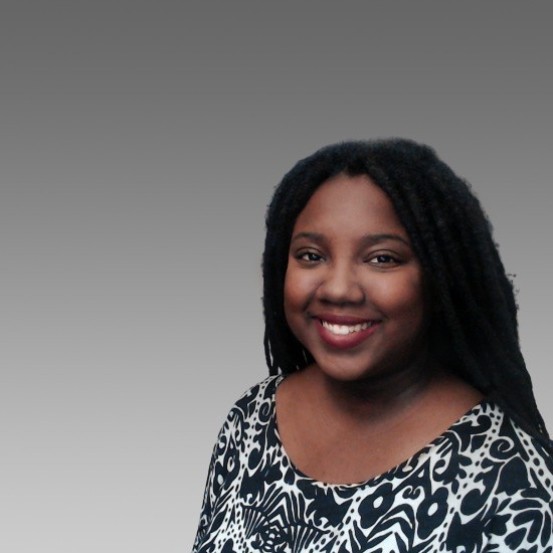
I am an AI Engineer and Applied Mathematics researcher building at the intersection of machine learning systems and theoretical foundations. My work spans LLM evaluation and alignment, ML pipeline development, and novel research in Topological Data Analysis and manifold learning.
I'm open to industry AI engineering roles (LLM evaluation, ML research engineering, applied AI) as well as PhD opportunities in TDA, geometric machine learning, or computational biology. Feel free to reach out!
August 2021 — May 2026
Developing novel methods in topological data analysis, manifold learning, and machine learning across multiple research institutions.
I am working on a neural network for satellite imagery analysis.
I am working on topological data analysis methods for directed graph structures.
I am working on new approaches to improving the theoretical foundations of neural networks.
Neural Linkage Learning for Agglomerative Tree Construction
I am working on a neural network approach to hierarchical clustering.
Low Distortion Local Random Fourier Features (LDLRF)
I am working on new approaches to manifold learning and dimensionality reduction.
Predicting Reversals in Earth's Magnetic Axial Dipole
I simulated Earth's magnetic axial dipole using deterministic chaotic differential equations in MATLAB, then applied Support Vector Machines to identify potential magnetic reversal thresholds. Presented at the 2023 Meeting of the Minds Conference.
I used Electronic Health Records to develop a predictive model for Pediatric Sleep Apnea in Python and R. I also collaborated with medical doctors at the University of Ohio to build a statistical model evaluating the clinical effectiveness of a novel cardiac support device.
UC San Diego — Summer Research Conference (SRC)
OralLos Alamos SFAF
Meeting of the Minds Conference
Oral & PosterApplied machine learning and data science across pharmaceuticals, biotech, AI safety, and social impact.
AI Engineer
I develop codebases in Python and C++ to challenge LLM performance on engineering tasks, and investigate reasoning traces using chain-of-thought analysis to detect misalignment, data leakage, and unsafe model behavior. I deliver structured evaluation reports using model safety and alignment frameworks, contributing directly to iterative model development cycles. Day-to-day I maintain shared evaluation codebases on GitHub using feature branches and pull requests, and I've built reusable benchmarking utilities and annotation frameworks shared across multiple model assessment pipelines.
Data Science Intern
I developed a statistical model to quantify regional food insecurity using demographic and donation data spanning 20 counties and over 500,000 households. I also built an interactive mapping tool that helps users locate nearby food pantries and their operating hours, improving access to food distribution services for communities experiencing food insecurity.
Data Science Intern
I processed and analyzed large-scale cell-free mRNA biomarker datasets containing over 100,000 gene expression measurements as part of an Alzheimer's disease benchmarking study. I identified disease-associated gene interaction patterns using Spearman correlation, then applied PCA and logistic regression with K-fold cross-validation to model sex-based differences in transcriptomic networks across patient cohorts.
Data Science Intern
I designed and built a knowledge graph integrating multi-modal biomedical datasets including drugs, targets, and diseases, consolidating over 200 Parquet files with more than two million rows using Python and DuckDB. I then applied Graph Attention Networks and Graph Convolutional Networks to model complex biological networks and surface patterns relevant to drug target identification across human and animal datasets.
Software Engineer Intern
I fine-tuned a BERT-based NLP model to extract biomedical entities and relationships from scientific literature, then built a full-stack application using React and AWS EC2 to make that data searchable by researchers. I also integrated the extracted data into a Neo4j knowledge graph with fuzzy search capabilities, enabling efficient exploration of complex biomedical relationships across drug, gene, and disease datasets.
Software Engineer Intern
I developed a Python pipeline to automatically identify AR44 naval systems at the package level and update their cybersecurity compliance status according to current standards. I also built an automated alert system that flagged outdated systems and sent email notifications to engineering teams, meaningfully reducing the time spent on compliance tracking. I maintained all pipeline code on GitHub with a clean commit history and documentation so any team member could reproduce or extend the system.
Side projects exploring systems programming, AI agent frameworks, and scientific computing, all maintained on GitHub with CI pipelines.
I built physim as a high-performance C++ N-body physics simulation engine. It supports Euler and RK4 time integration, gravitational, electrostatic, and spring forces, and elastic sphere collision detection, using OpenMP-parallelized force accumulation and an octree spatial broadphase for scalable performance. I also exposed the full simulation API to Python via pybind11 bindings, so researchers can drive and analyze simulations without touching the C++ layer. Includes a solar system orbital example and a charged particle simulation, built on CMake and maintained with GitHub Actions CI.
I designed agentcore as a TypeScript framework for building AI agents that hold up in production. The core is composable: a ToolRegistry handles tool dispatch, MemoryManager keeps context windows coherent under overflow, and WorkflowEngine runs concurrent async tasks with configurable concurrency limits. On top of that sit a PluginManager for loading tool bundles at runtime and an Orchestrator for running multiple agents in parallel with fail-fast semantics. Ships as a single-entry-point library with OpenAI and Azure client wrappers, TypeScript type-checking in CI, and a Jest test suite on Node 20.
I built biopipeline as a pip-installable Python library for bioinformatics researchers who want a clean toolkit without a lot of setup. It handles FASTA, FASTQ, and GenBank file parsing, local pairwise sequence alignment via Smith-Waterman, and a composable pipeline system where processing steps can be chained or run in batch. A YAML-driven config and a CLI let researchers run common analyses without writing Python. Ships with comprehensive unit tests, and CI runs pytest across Python 3.10–3.12 via GitHub Actions.
3.8 GPA — 18 units
$10,000 — Academic Achievement
$15,000 Scholarship
3.8 GPA — 14 units
4.0 GPA — 16 units
$5,000 — CSUSB
$1,000 — Research Grant
$1,000 — Southern California Conferences for Undergraduate Research
I'm ambidextrous
I play piano and guitar
I enjoy gardening
I love collecting math books
I'm open to industry AI engineering roles (LLM evaluation, ML research engineering, applied AI) and PhD opportunities in topological data analysis, geometric machine learning, or computational biology. I'm also happy to discuss research collaborations or any intersection of the two.